

Mračaj · Prnjavor · since 1980

Honey and bee products.

Mracaj · Prnjavor · since 1980.100% sirovo vrcano
See the jars

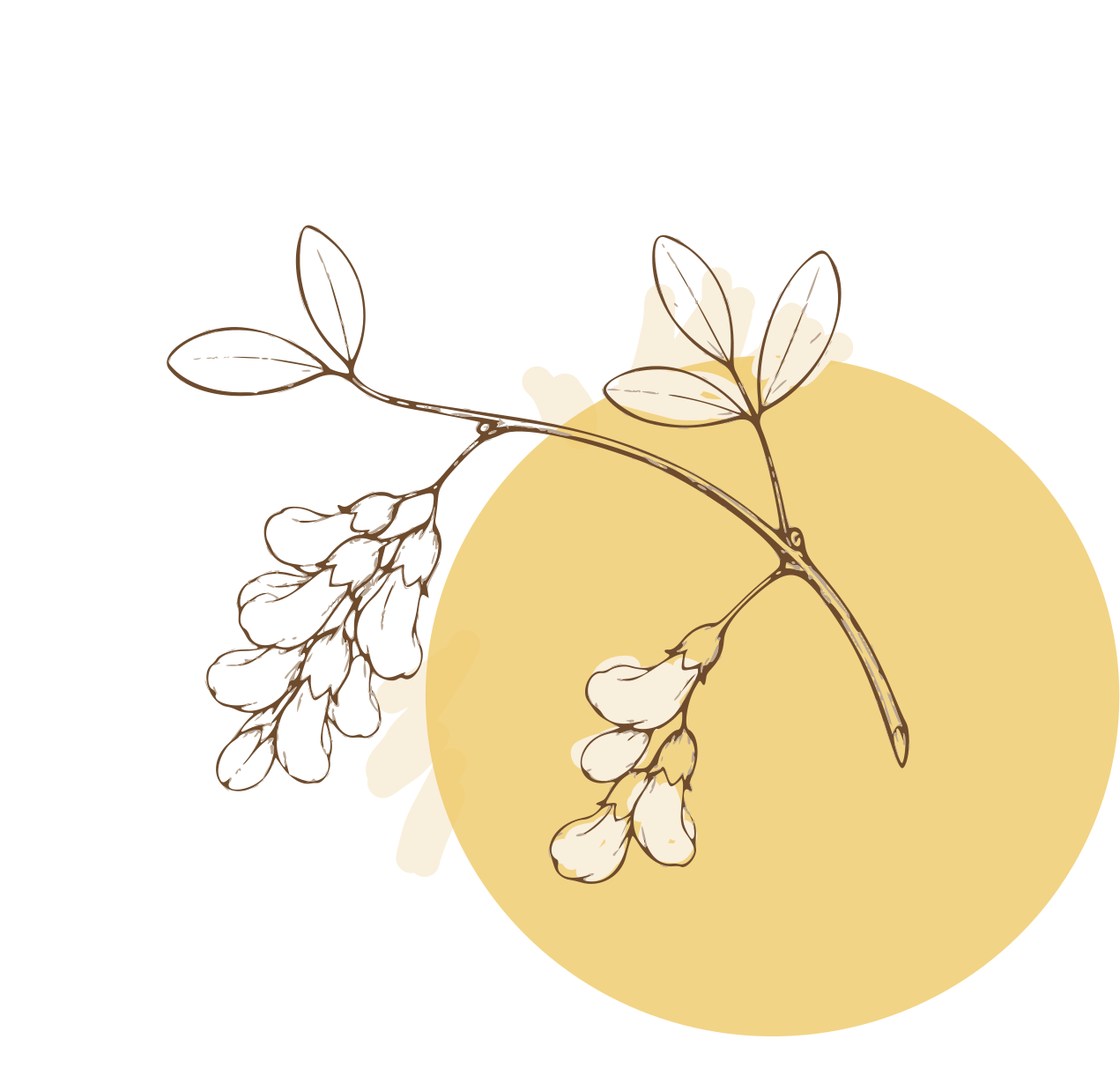
Acacia is the first honey we spin, while the forest is still white. It is the only honey in the year with a deadline — ten days of flowering, and then it is gone.

Forage
May–June
Taste
Mild
Colour
Light gold
Crystallising
Slow

Acacia is short and unforgiving. Miss the forage and it is gone until next May. The whole season is built around those ten days.

  • A short spring forage, with no later honeys mixed in
  • Mild taste, with no bitterness and no heavy scent
  • Naturally light colour, never heated
  • No additives, no colourings, no flavourings
  • Straight from our apiary in Mracaj

The honey is cold-extracted and left to settle in the jar, with no heating and no pressure filtering. That is why it crystallises in time — and that is the only proof that nothing in the jar has been touched.

A spring forage

From hive to jar

Meadow honey

A meadow in a jar.

Meadow honey is not one forage but many — camomile, dandelion, clover, linden and everything flowering alongside them. Its taste shifts from season to season, and that is why we never blend two years into one batch.

Meadow honey

Beyond honey, two more things come out of the hive and we pack both ourselves: propolis and imuno mix. Small batches, the same hives.

The season in the apiary

A year with the bees.

March–April

Preparing the apiary

We go through the hives after winter, swap frames, clean the floors and feed the colonies that came out weak. They have to be strong before the first forage.

May

Acacia forage

Ten days, and that is all. We move the hives into the acacia forest before the buds open and leave them alone until the blossom falls.

June–July

Meadow forage

Once the acacia has flowered and dropped, the bees move to the meadows. This honey is not a single variety but a mix of everything in flying range.

July

Extraction

We only spin sealed comb. If the honey is not ripe it does not leave the hive — the frame goes back and we wait a few more days.

July–August

Straining and settling

The honey is cold-strained through a sieve, never heated. Then it settles in a tank until the foam is skimmed and the taste has come together.

August

Filling

We fill by hand, into glass, straight from the tap. Every jar gets a label with its batch number and the forage it came from.

September

Packing

Jars go into cardboard cradles, one per cell, so they never travel glass against glass.

October

Delivery

We drive it ourselves, at a time we agree on. For larger quantities we arrange the location and the date together.

Crystallising is not spoilage — it is proof the honey was never heated.

Raw honey sets in time. The sugars bind into fine crystals, the honey lightens and thickens — a sign that it was neither heated nor pressure filtered. Keep the jar at room temperature, away from sun and steam. If it has gone hard, stand it in warm water up to 40 °C and let it come back slowly.

Temperature
15–25 °C
Shelf life
No expiry while sealed
Heating
Never above 40 °C

See the products