
Landthatremembers
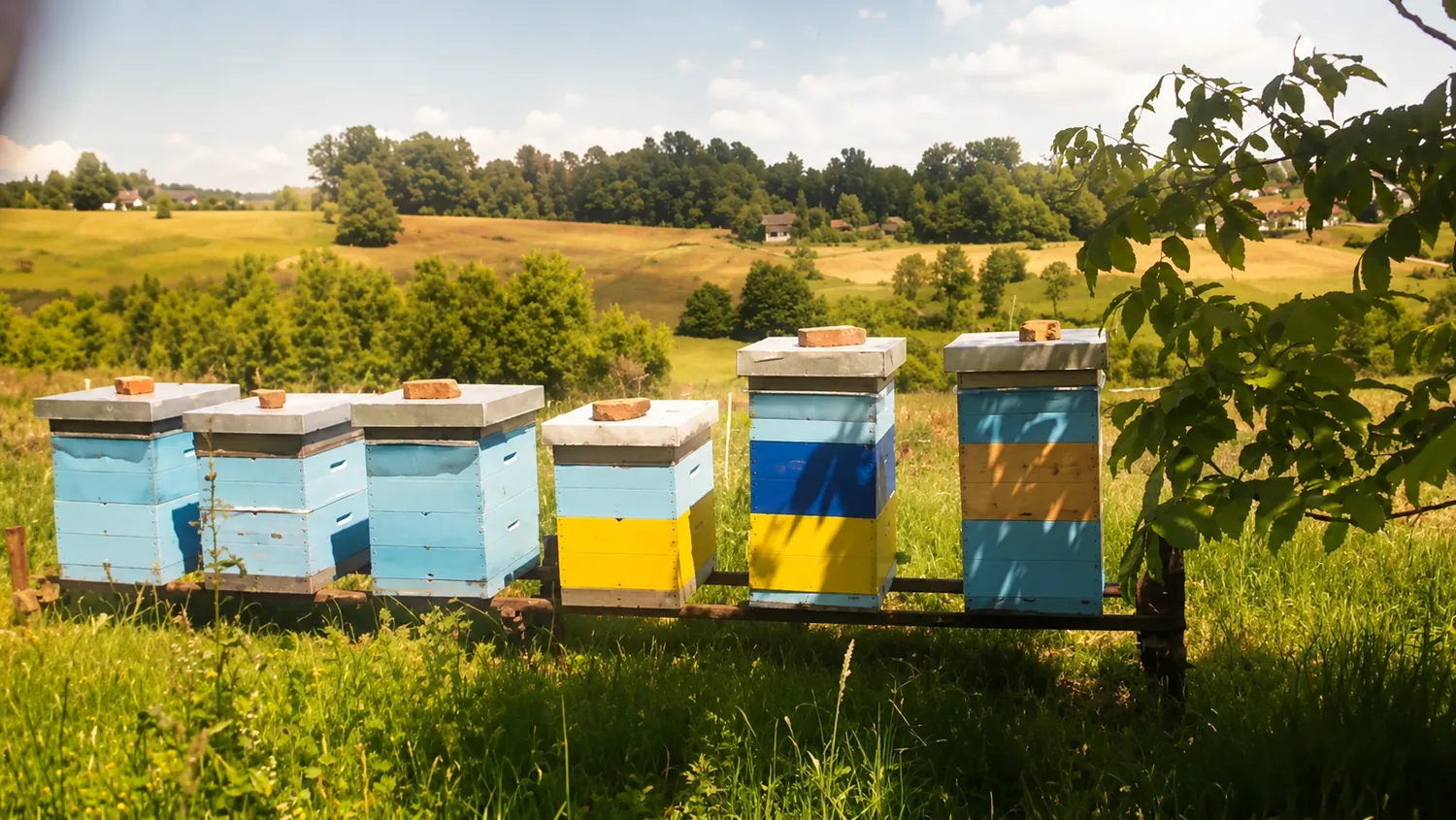
In a village near Prnjavor, on a hill
Height,silence,andlight
Our apiaries stand on twelve hectares of meadow above the village of Mračaj, near Prnjavor. At six hundred metres above sea level, ringed by acacia and wild flowers, they give honey that tastes a little different each year, yet keeps the same clarity and calm.
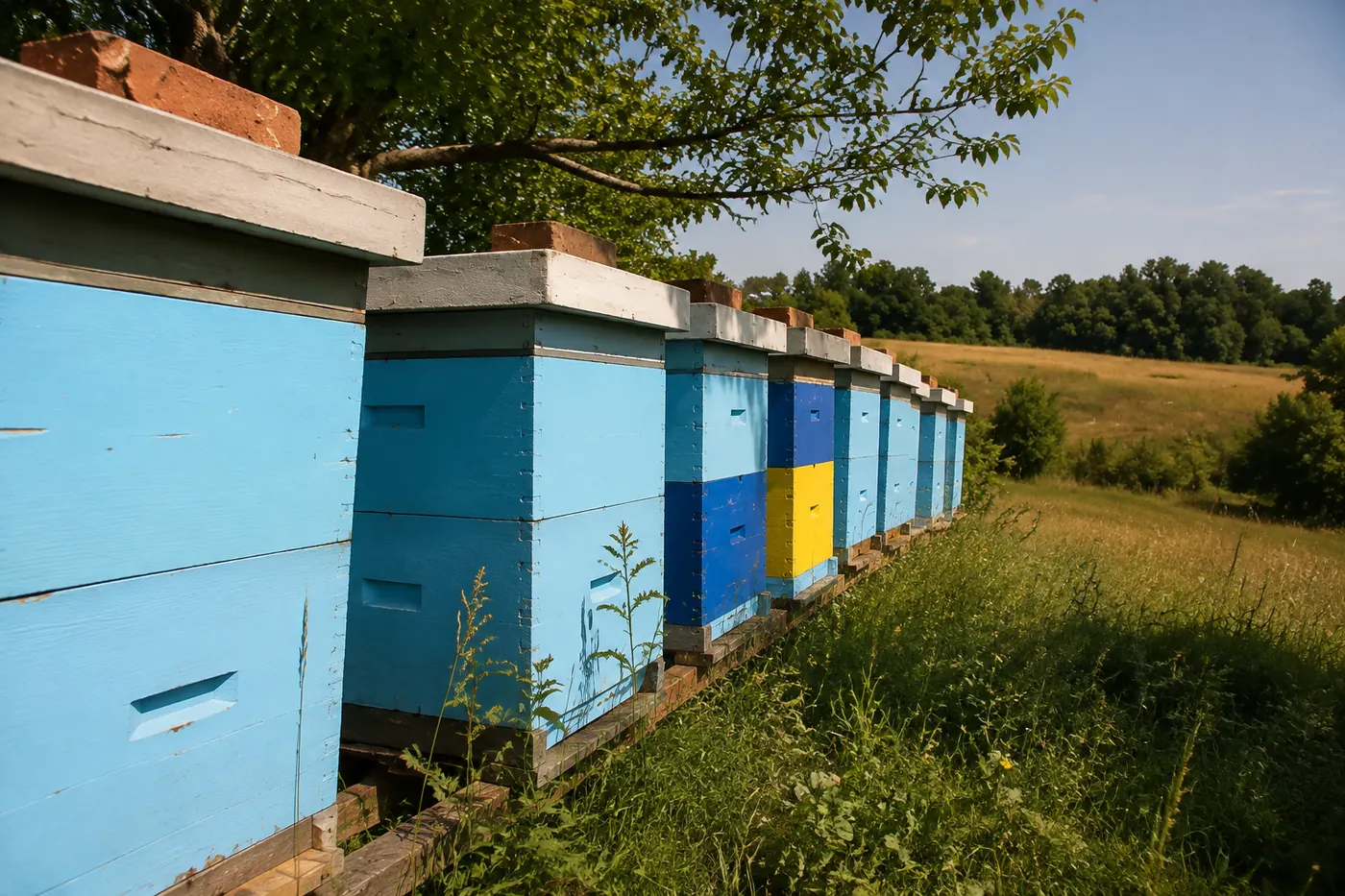
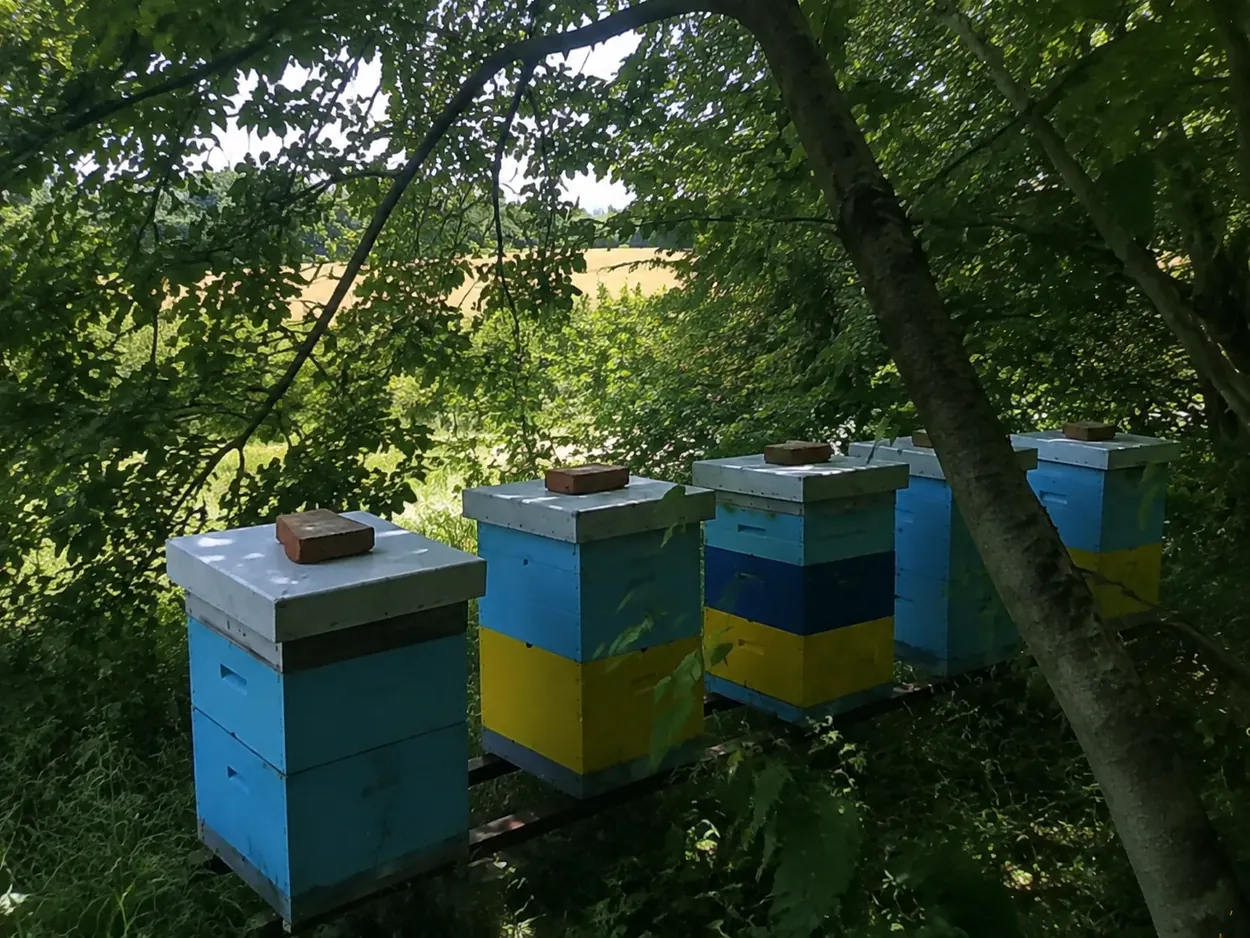
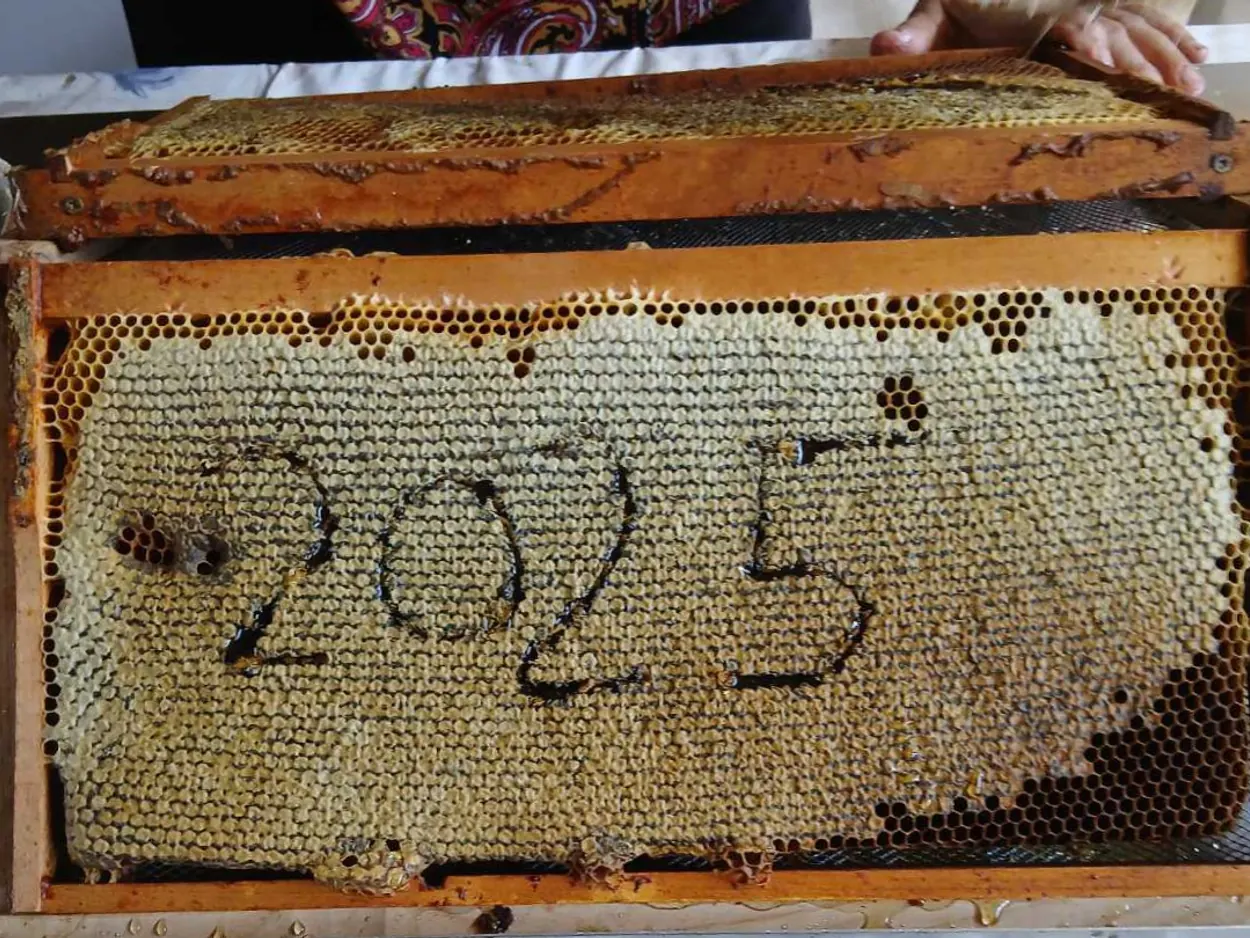
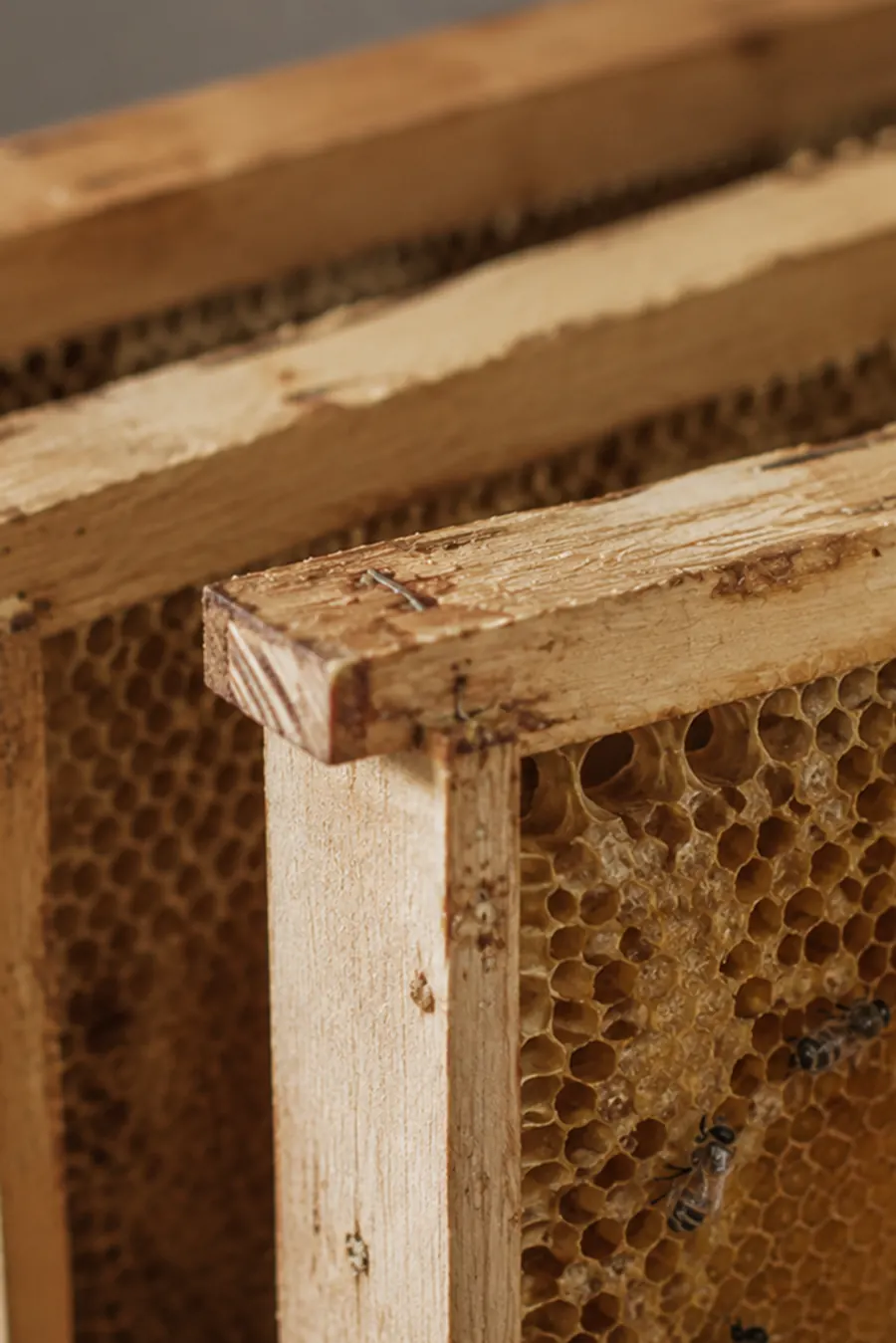
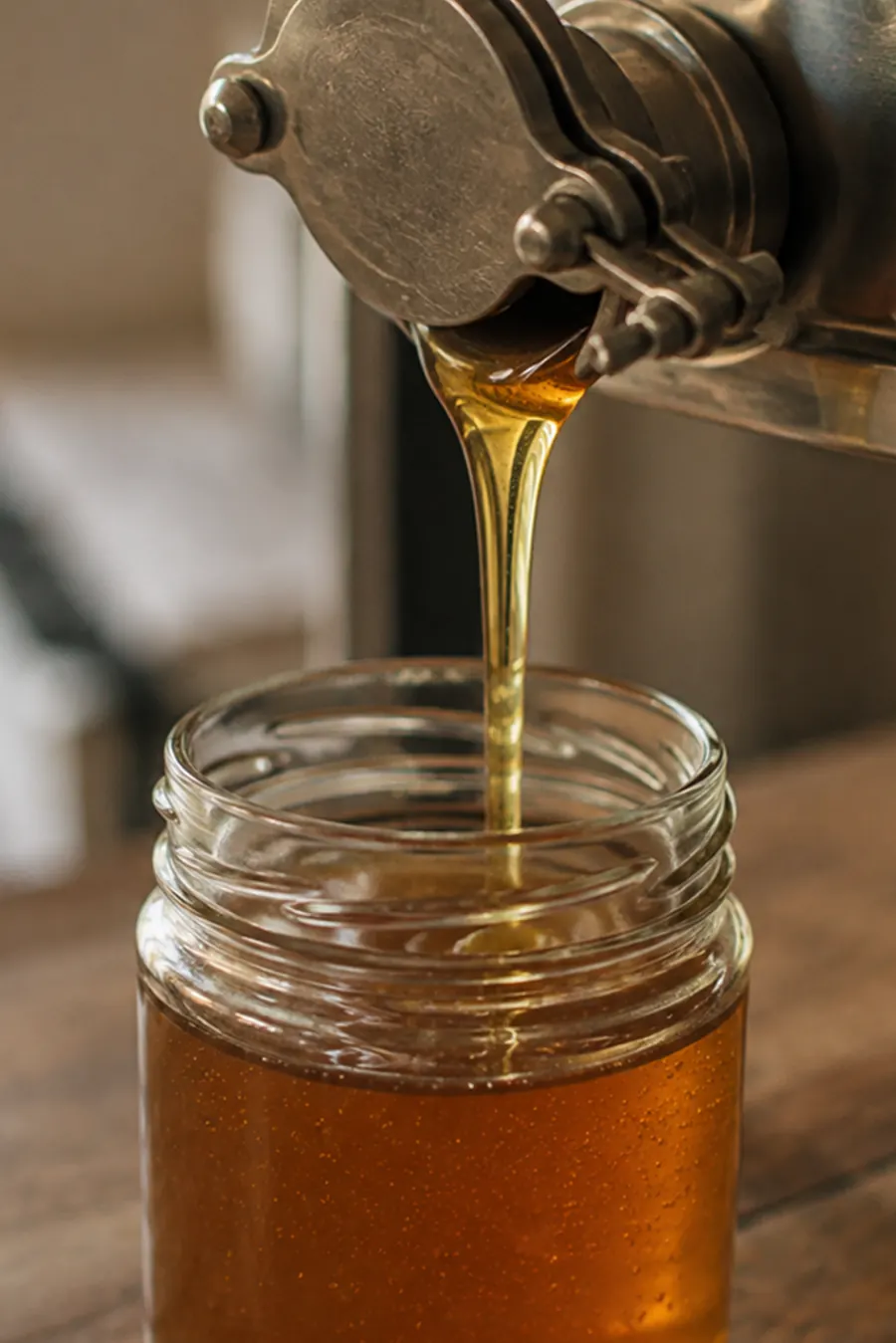
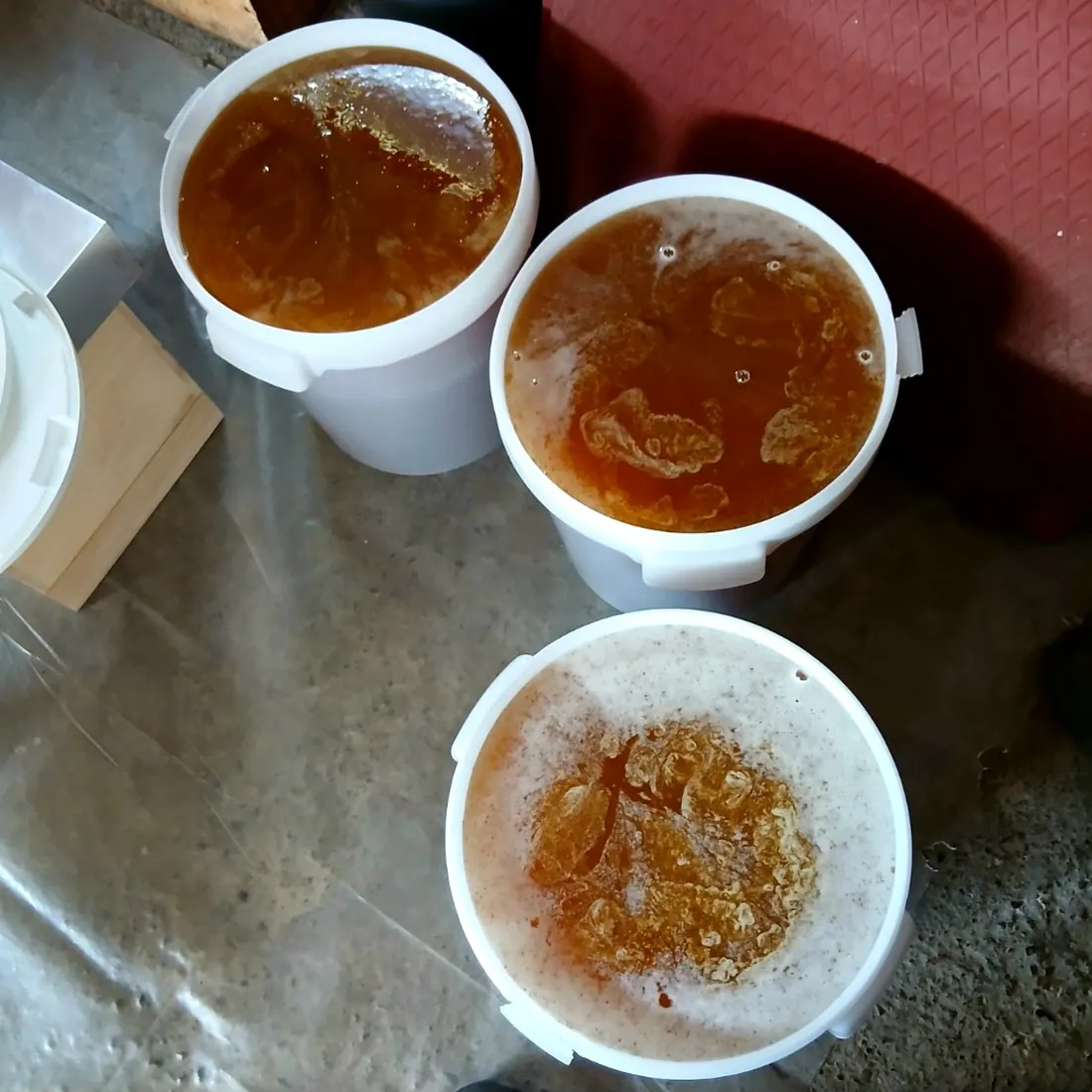
The soil beneath our apiaries is shallow and stony, a mix of limestone and clay that every autumn rain turns over again, so the meadow above it never grows lush but stays fine, dense and full of grasses that flower in turns from spring to late summer. The air changes twice a day: damp rises from the valley in the morning and a cool breath comes down off the forest at dusk, and that difference between day and night keeps the forage open longer than it would ever be on flat ground.
Ahiveuphill
At the heart of the estate lies one hectare of old meadow that we neither cut nor feed, letting it keep its own order. The hives our grandfather set down in 1980 still stand on that same south-facing slope, and it is still the first place we extract from. The grasses there were never sown — they came back on their own after years of grazing, so a single drop of honey holds linden and clover and a dozen flowers we have no names for. From that corner comes the honey we set aside and extract in small batches, different every year in colour and body, and always the same in that the whole slope is in it.
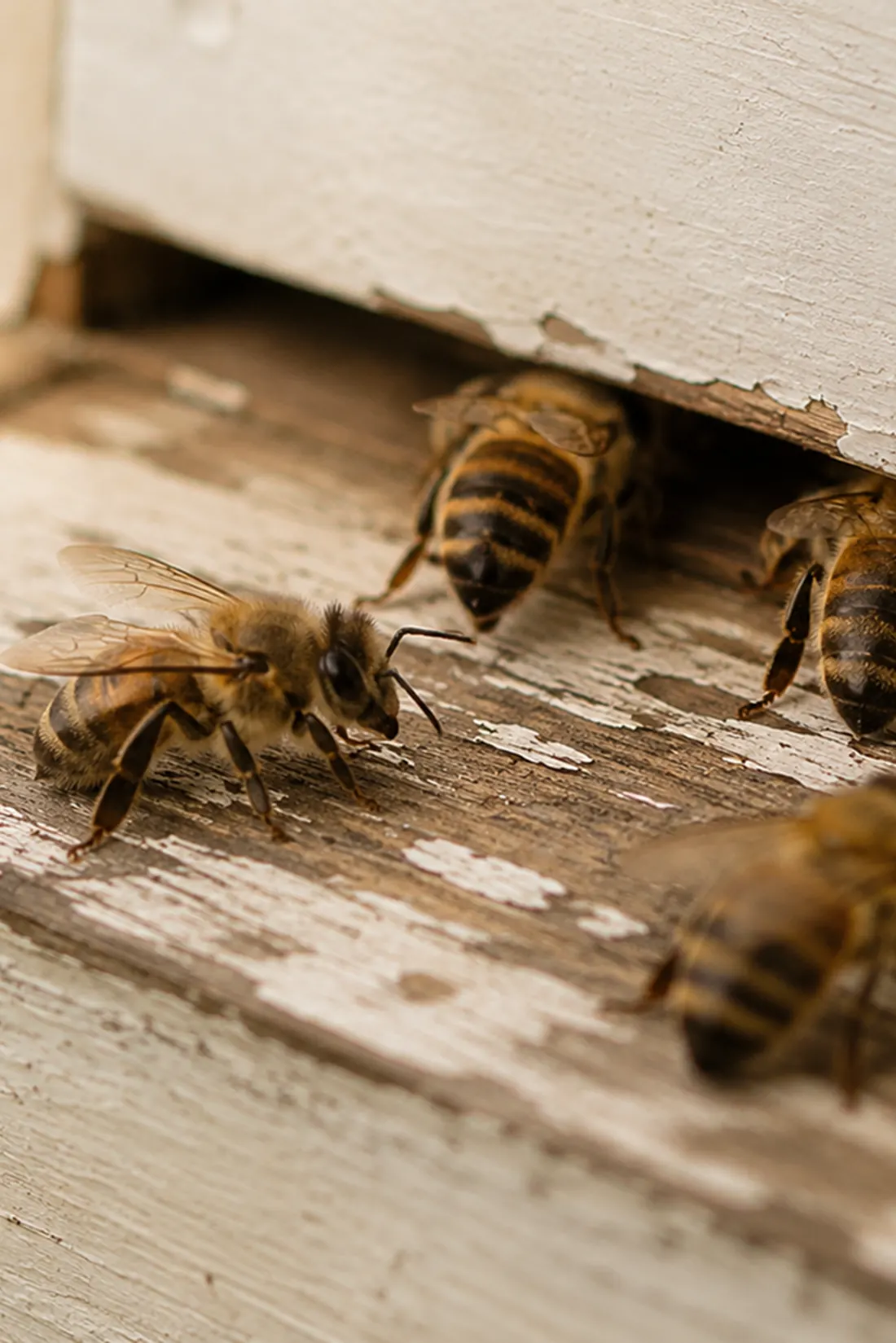
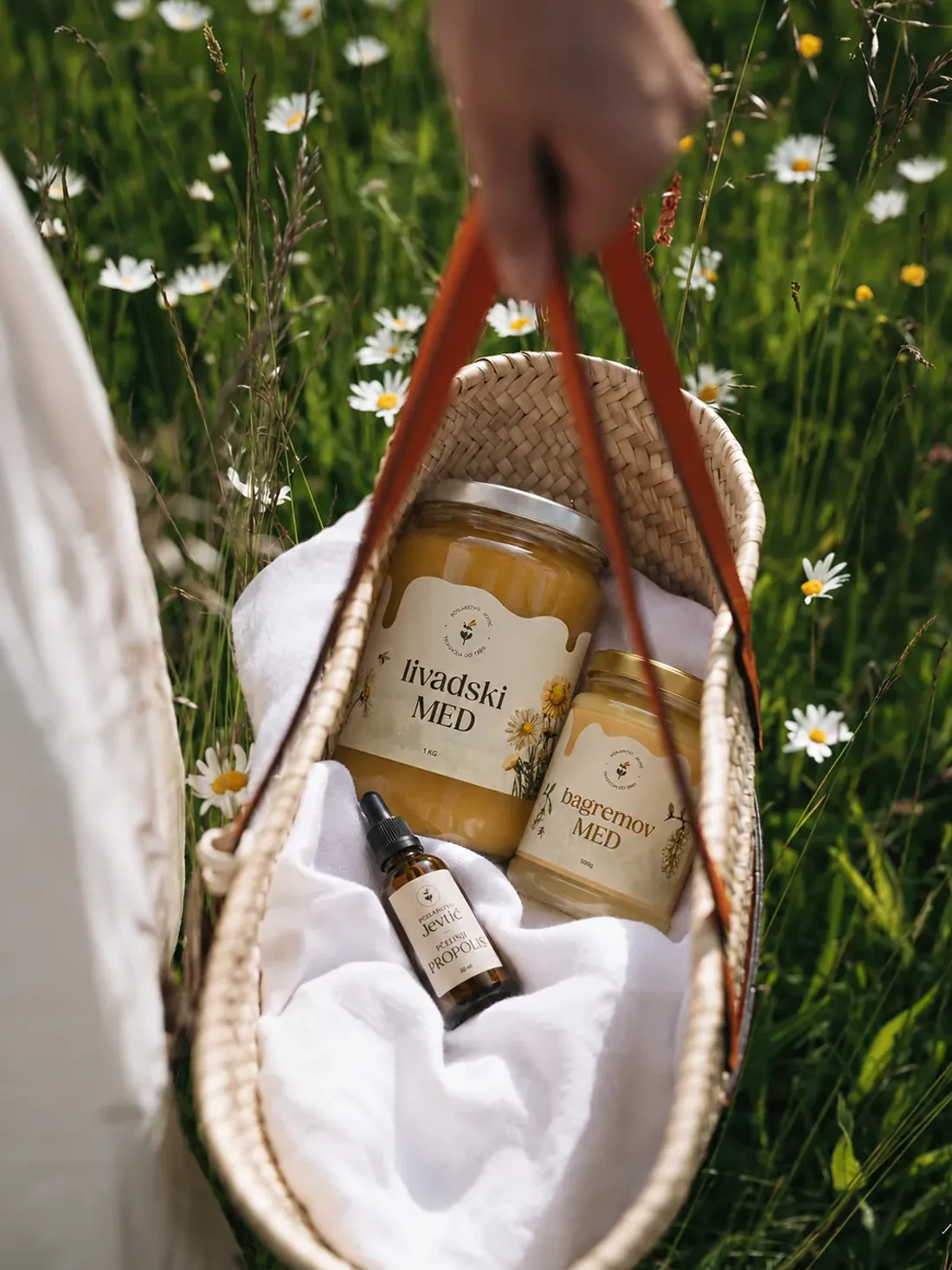
Kinds of our honey
Greenheartofthehill
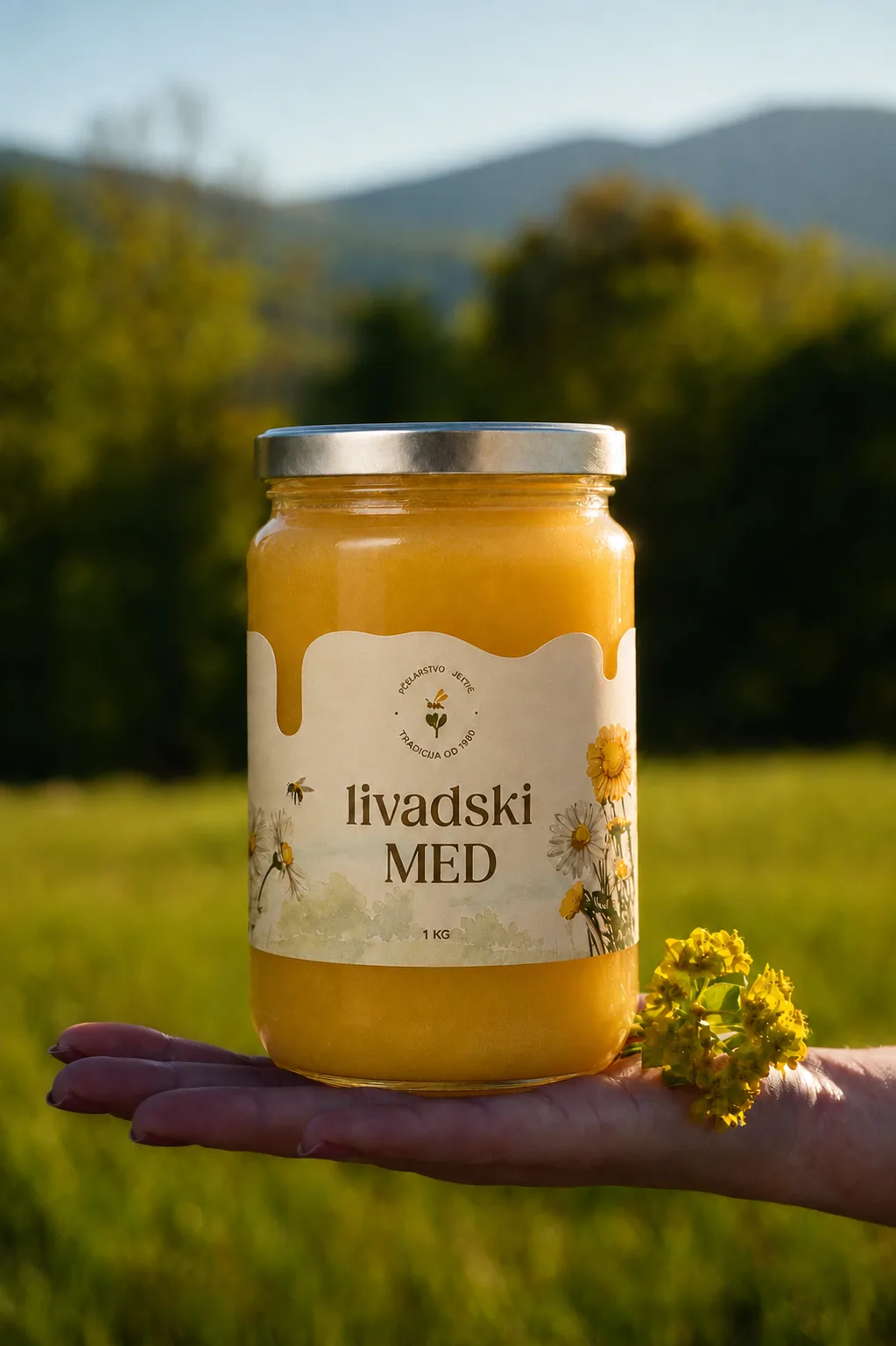
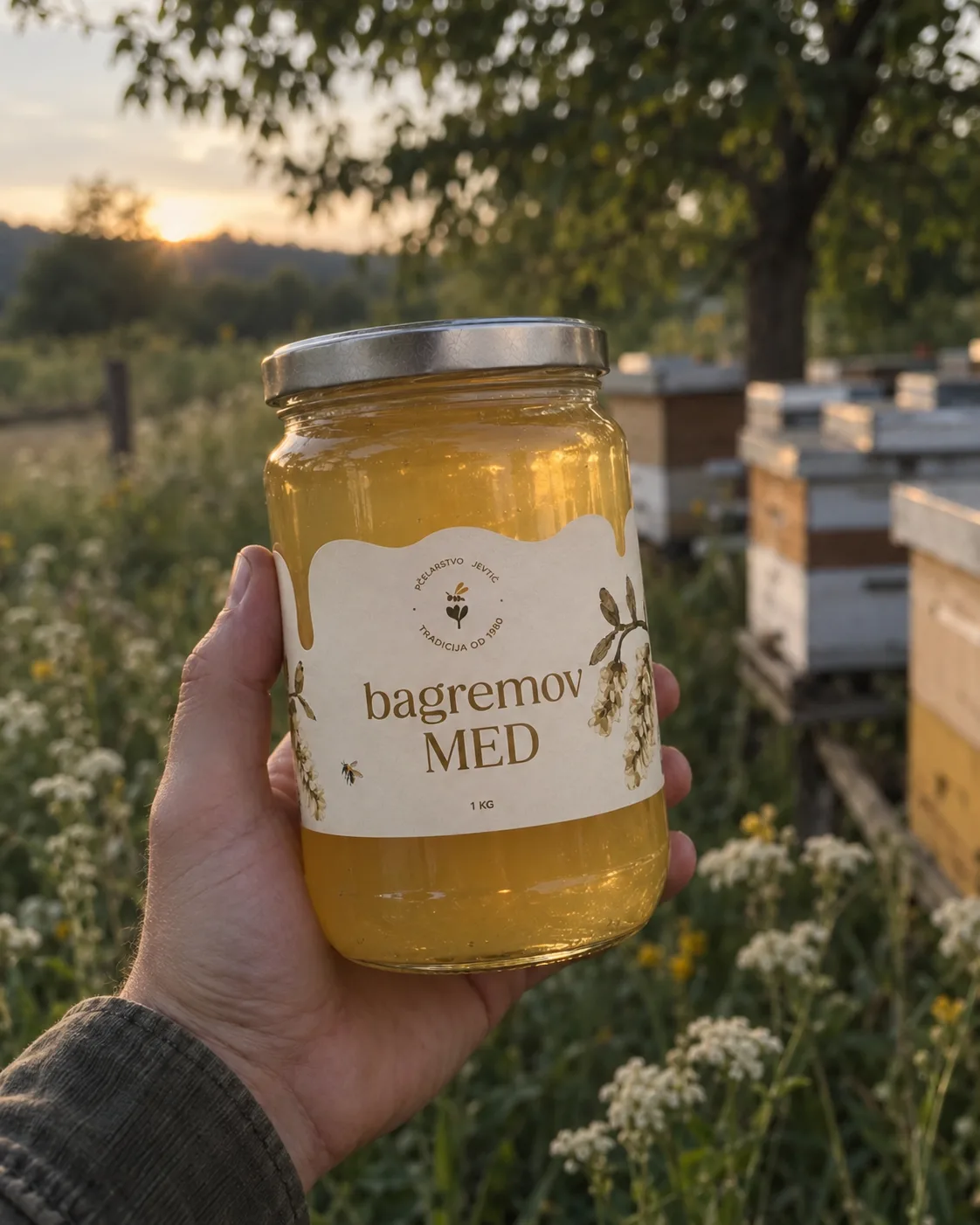
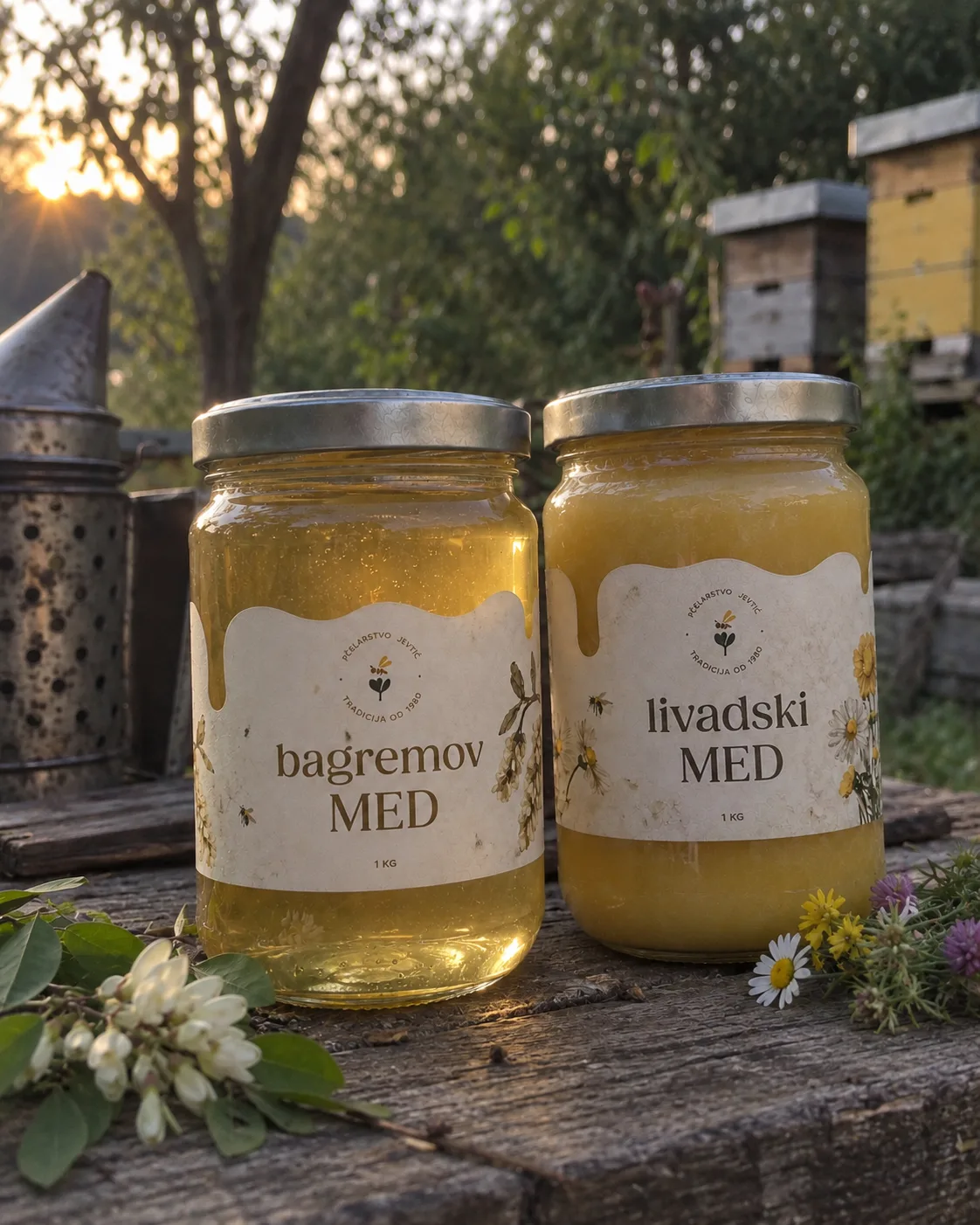
Careful tending has kept the grasses that grew here long before us, and their deep roots give the honey the body and calm you can taste in every harvest.
| Forage area | 9 hectares |
|---|---|
| Hives | old meadow communities |
| Elevation | 600 m |
| Aspect | south |
| Coordinates | N 44° 53′ 57″ / E 17° 32′ 01″ |
| Forage | shallow limestone soil with clay and fine stone |
| Hive layout | open |
| Forage diversity | many flowering kinds |
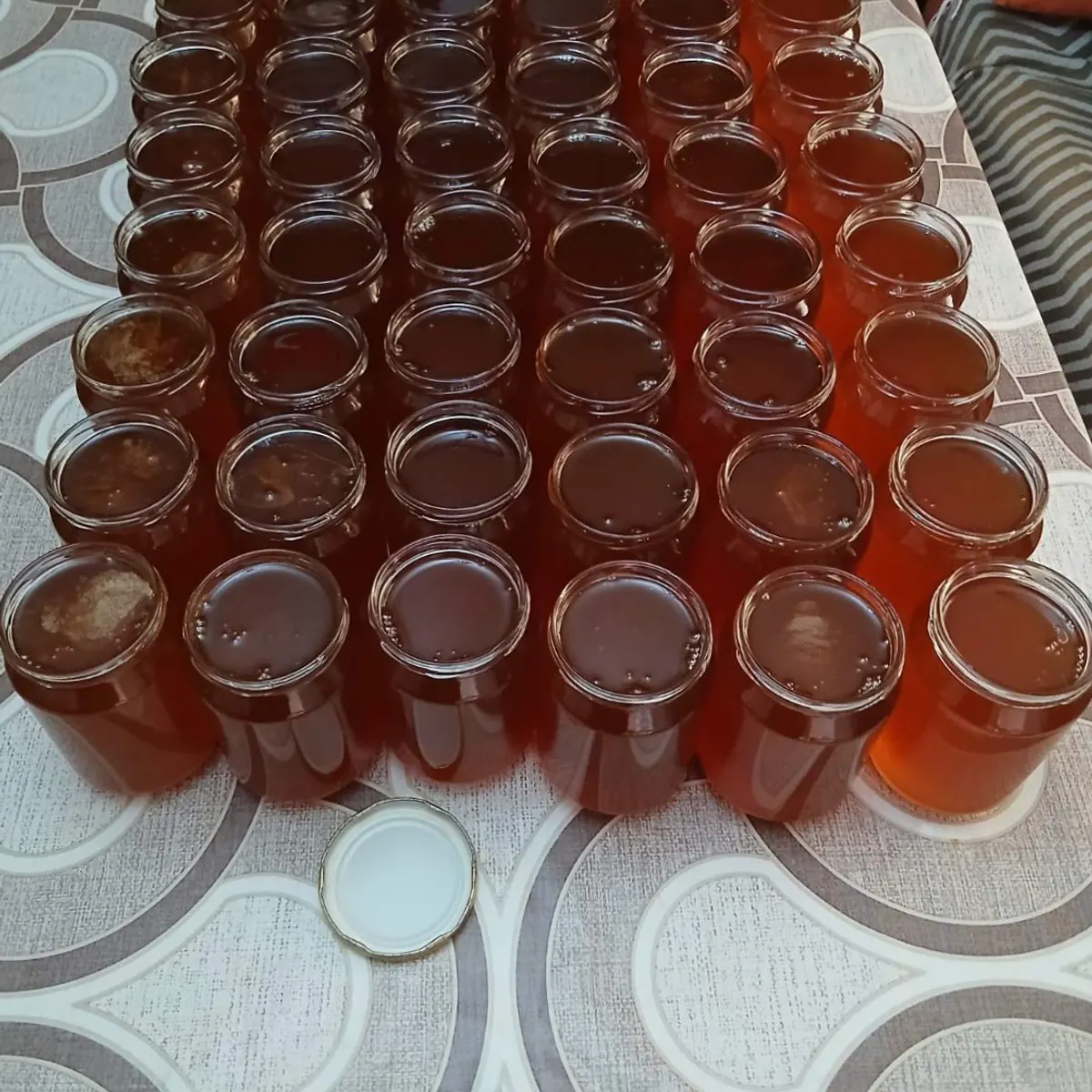
Careful work has brought the old apiary back to the order it once had, and the colonies living on it now follow their yearly course without our interference:
smaller but denser colonies, deep-rooted forage that survives a drought, and old combs that serve the colony as a reserve — together they give a resilience you later see in the jar: steady quality year after year, clear body and
aromas that come from the age of the colonies and from how little we take. Sheltered and quiet, this slope is the true heart of the apiary, where beekeeping knowledge meets the patience of the land and gives an honest, lasting honey.
0102
Our process
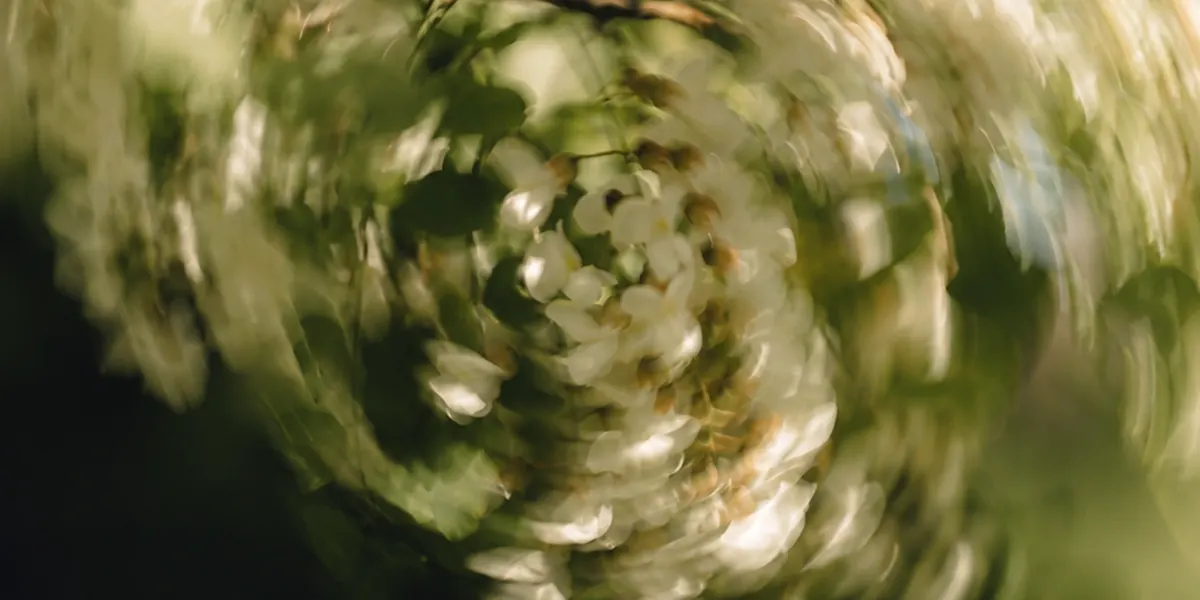
From the first spring inspection to the last summer extraction, every step is done by hand and in an order that is never cut short. The honey is not heated or forced through a filter; it settles on its own and goes into the jar as it left the comb.
See the process